AI in Energy 2026: Smart Grids, Renewables & Climate Tech Guide
The energy sector is at the intersection of two transformative forces: the global shift to renewable energy and the rapid adoption of artificial intelligence. AI is enabling smarter grids, optimizing renewable energy output, predicting equipment failures before they cause outages, and helping buildings and factories dramatically reduce energy consumption. This guide covers AI in energy in 2026 — the applications delivering measurable results, the companies leading implementation, and what the next five years will bring.
AI in energy encompasses machine learning applications across the entire energy value chain: predictive maintenance for power generation equipment, AI optimization of renewable energy output (wind turbines, solar farms), demand forecasting for grid operators, smart building energy management systems, and AI-enabled carbon accounting platforms. The energy sector AI market is expected to exceed $7.8 billion by 2027. The most impactful applications are in grid management — where AI optimization can reduce renewable curtailment by 30–50% — and predictive maintenance, where AI reduces unplanned generation outages by 20–35%, directly improving both energy security and the economics of the energy transition.
AI Smart Grid Management
Modern power grids face a fundamental challenge: electricity must be generated and consumed simultaneously, and renewable energy sources — solar and wind — produce power based on weather conditions rather than demand. AI grid management systems balance this supply-demand equation in real time across interconnected networks spanning thousands of nodes.
AI Demand Forecasting for Grid Operators
Grid operators use AI demand forecasting models that integrate weather data, historical consumption patterns, economic indicators, and real-time sensor feeds to predict electricity demand minutes to days ahead. These forecasts drive generation dispatch decisions — which power plants to run and at what output — optimizing the mix of generation sources to meet demand at lowest cost while maintaining grid stability.
Elia Group, the Belgian transmission system operator, reports that AI demand forecasting reduces forecast error by 30% compared to traditional statistical models, directly translating to lower operating reserves requirements and reduced balancing costs. For a large grid operator, a 30% improvement in forecast accuracy can save tens of millions of euros annually.
AI Renewable Energy Integration
Wind and solar output is inherently variable and difficult to predict accurately. AI forecasting models trained on weather pattern data, satellite imagery, and historical production records predict renewable output with increasing accuracy — enabling grid operators to plan conventional generation dispatch around anticipated renewable production rather than reacting after the fact.
Google DeepMind’s collaboration with Google’s wind power portfolio demonstrated that AI wind power forecasting 36 hours ahead increased the economic value of wind energy by approximately 20%, by enabling advance capacity commitments to the grid operator rather than real-time spot market sales.
AI for Renewable Energy Optimization
Wind Turbine AI Optimization
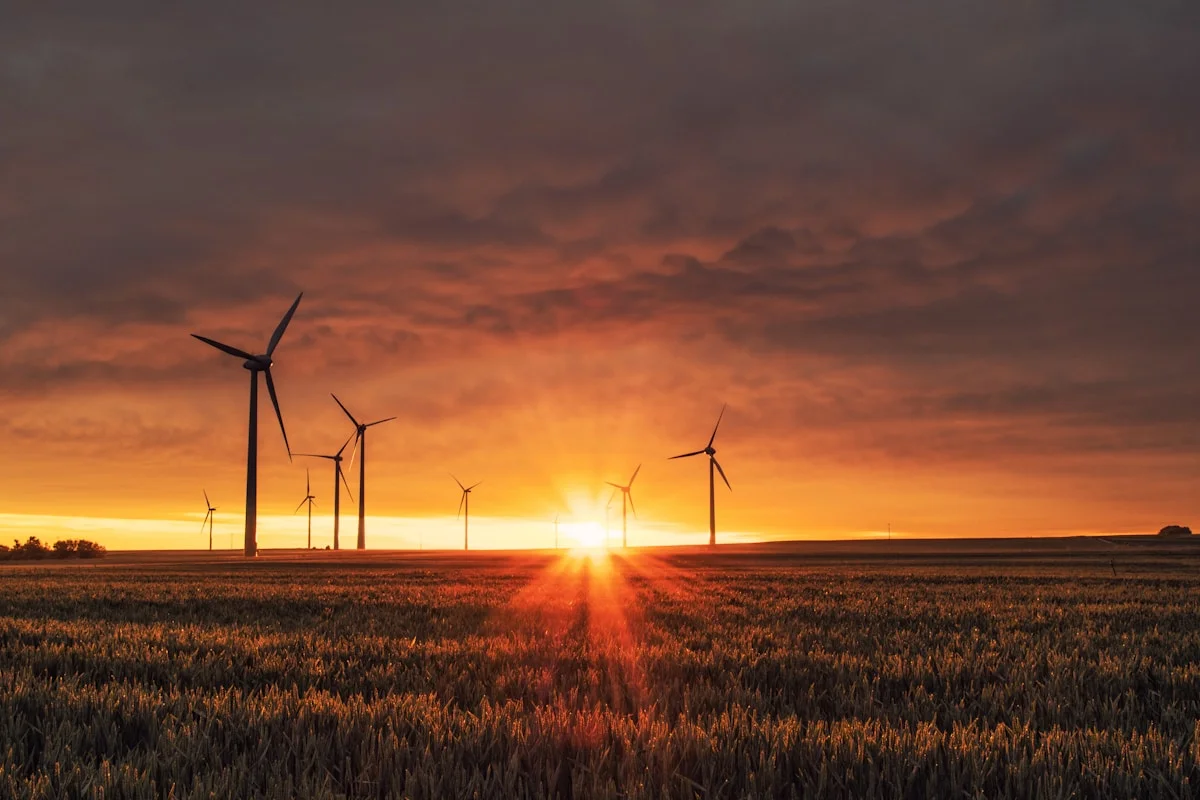
Individual wind turbines produce maximum power at specific wind speeds and directions — but within a wind farm, turbines create aerodynamic wakes that reduce output for downstream turbines. AI control systems optimize the yaw angle (rotational orientation) of each turbine to maximize total farm output rather than individual turbine output, accounting for wake interactions that simple controllers ignore.
Siemens Gamesa’s AI-optimized wind farm control systems demonstrate 1–2% increases in total farm output in commercial deployments — seemingly small percentages that translate to millions of euros in additional revenue for large offshore wind farms over their operating lifetime. DeepMind’s wind power AI demonstrated up to 20% improvement in wind energy value through improved forecasting and dispatch optimization.
Solar Panel AI Monitoring and Optimization
AI monitoring platforms for solar installations analyze production data from each individual panel string, identifying underperformers caused by shading, soiling, degradation, or inverter faults. Rather than discovering problems during quarterly manual inspections, AI systems flag issues within hours of onset — before they compound into extended underperformance or inverter failures.
AI Building Energy Management
Buildings account for approximately 40% of global energy consumption, and most buildings operate far below their efficiency potential — HVAC systems running at fixed schedules regardless of occupancy, lighting unchanged regardless of natural light availability, hot water systems heating water throughout the night for daytime use. AI building energy management systems optimize all of these systems simultaneously.
Google’s DeepMind AI applied to Google’s own data center cooling systems reduced cooling energy consumption by 40% — a result so significant that Google subsequently made the system available to external operators through Google Cloud. The AI learns the thermal dynamics of each data center uniquely and continuously adapts its cooling strategy as equipment loads and ambient conditions change.
AI building energy management systems optimize heating, ventilation, air conditioning, lighting, and plug load systems simultaneously using reinforcement learning algorithms that model each building’s unique thermal characteristics. Unlike programmable thermostats that follow fixed schedules, AI BEMS continuously adjusts setpoints based on real-time occupancy sensor data, weather forecasts, utility pricing signals, and equipment condition — pre-cooling buildings during low electricity price periods, adjusting ventilation based on CO2 sensors, and predicting occupancy patterns from calendar data. Commercial buildings implementing AI BEMS report energy savings of 15–30% with payback periods of 2–4 years, representing one of the highest-ROI energy efficiency investments available to building owners.
AI for Carbon Accounting and Climate Tech
As carbon markets expand and corporate net-zero commitments require detailed emissions accounting, AI platforms are enabling the measurement, reporting, and verification of carbon footprints at the asset, company, and portfolio level. Companies like Persefoni, Watershed, and Salesforce Net Zero Cloud provide AI-powered carbon accounting that aggregates activity data across operations, supply chains, and financial portfolios to calculate Scope 1, 2, and 3 emissions.
AI is also powering the voluntary carbon market — platforms like Pachama use satellite imagery analysis and machine learning to verify forest carbon sequestration in conservation and reforestation projects, addressing the integrity challenges that have undermined confidence in offset markets.
Best AI Energy Tools in 2026
- Google DeepMind (energy applications) — Best AI for data center and renewable energy optimization. Demonstrated 40% data center cooling energy reduction and 20% wind energy value improvement.
- Uplight — Best AI platform for utility customer engagement and demand response programs. Helps utilities reduce peak demand through AI-personalized efficiency recommendations.
- Siemens EnergyIP — Best enterprise AI platform for energy utilities. Combines grid analytics, predictive maintenance, and operational intelligence.
- Stem (Athena) — Best AI-powered battery storage optimization. Maximizes economic value of behind-the-meter storage through AI dispatch optimization.
- Percept.AI (ABB) — Best AI predictive maintenance for power generation equipment. Strong in transformer and substation monitoring.
- Watershed — Best corporate carbon accounting platform. AI-powered Scope 1/2/3 emissions calculation with supply chain integration.
Key Takeaways
- AI grid management is essential infrastructure for integrating high renewable energy shares — demand forecasting and dispatch optimization enable the energy transition
- Wind and solar AI optimization delivers 1–20% output improvements, adding significant revenue over the asset lifetime
- AI building energy management consistently delivers 15–30% energy savings with short payback periods
- Carbon accounting AI is enabling the corporate net-zero transition by making emissions measurement practical at scale
- The energy sector AI opportunity is enormous — most assets and operations still run on rules-based systems that AI could significantly optimize
Related: AI Use Cases Across Industries | AI in Manufacturing | The Future of Artificial Intelligence
Resource: The IEA’s AI and Energy report provides the most comprehensive global analysis of AI deployment across energy systems — essential reading for understanding the scope and pace of AI energy transition.
Related Reading
- AI Smart Grid Management: How AI Balances Power in Real Time in 2026
- AI for Solar and Wind Energy Optimization in 2026
- How AI Reduces Building Energy Consumption by 40% in 2026
- AI in Oil and Gas: Exploration, Safety and Efficiency in 2026
- AI Carbon Footprint Tools: Best Platforms for Businesses in 2026