
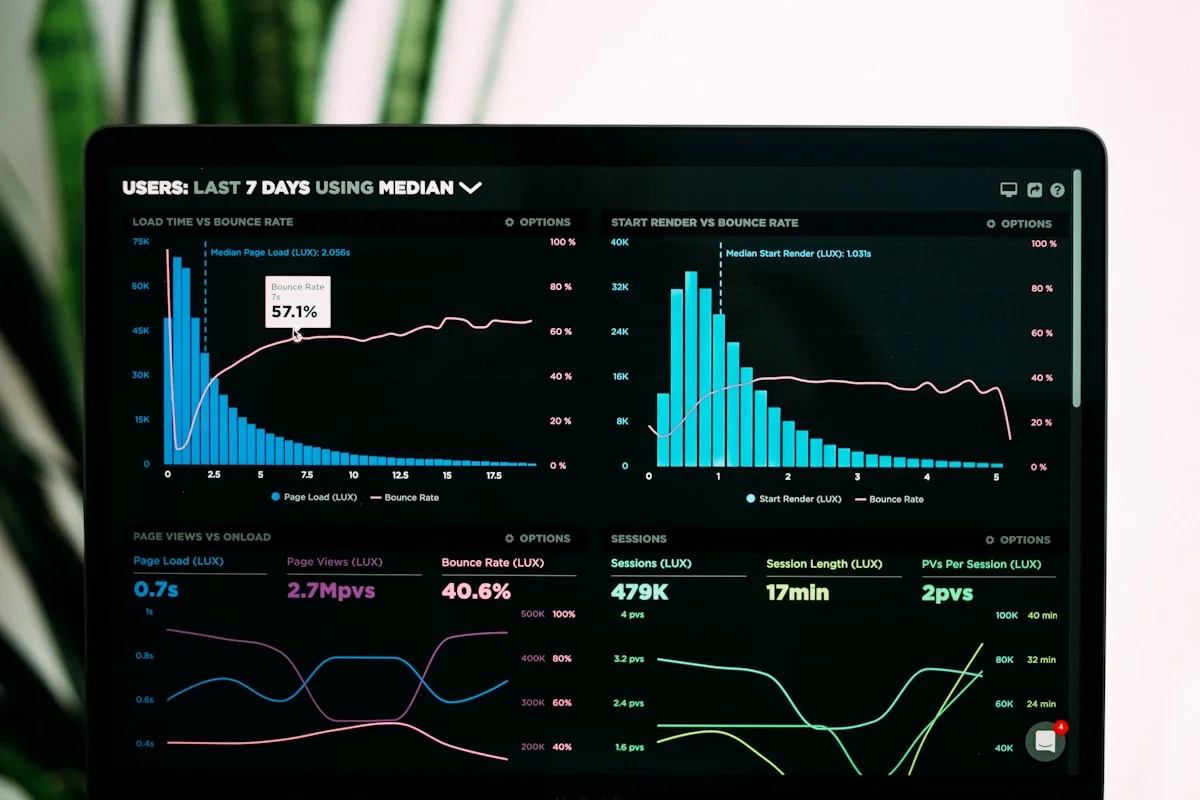
AI analytics tools have transformed data from a specialist resource into a business-wide asset. Natural language querying lets a marketing manager ask “which campaigns drove the most revenue last quarter?” and get an instant, accurate answer from live business data. Predictive analytics shifts the question from “what happened?” to “what will happen?” The AI analytics market grows at 23-27% CAGR to $22.1 billion by 2027. Organizations with strong analytics cultures show 1.7x higher revenue growth and 3.6x better shareholder return. This guide covers the best AI analytics platforms for different team profiles.
What AI Analytics Adds to Traditional BI
Traditional BI requires users to know what question to ask, understand the data structure, and build visualizations. AI analytics adds: natural language querying (ask in plain English, receive accurate answers), anomaly detection (AI surfaces unusual patterns before humans notice), and predictive modeling (forecast future outcomes rather than just reporting past events). Gartner projects 80% of analytics interactions will be natural language by 2027.
AI analytics adoption reflects a transition from specialist tools to democratized analytics. Natural language querying is the capability driving democratization — enabling business users without SQL or BI expertise to access data insights directly. The business impact is documented: organizations with strong analytics cultures show 1.7x higher revenue growth and 3.6x better total shareholder return (McKinsey). The AI analytics market specifically grows at 23-27% CAGR reaching $22.1 billion by 2027 (Markets and Markets). Most impactful use cases in 2026: sales and revenue analytics (AI identifying revenue at risk before churning), marketing attribution (AI attributing revenue across the customer journey), operational efficiency (identifying process bottlenecks), and customer analytics (segmenting by lifetime value and churn probability).
Best AI Analytics Platforms
Google Looker + Gemini: Best for Google Cloud. Natural language queries of Looker data models, AI dashboard summaries, conversational analytics. See our Google Analytics AI guide. Microsoft Power BI + Copilot: Best for Microsoft ecosystem. Report generation from natural language, dashboard insights, included in Microsoft 365 E5. Tableau + Einstein AI: Best visualization quality and analyst depth. Explain Data, Ask Data, Tableau Pulse. See our Tableau vs Power BI comparison. ThoughtSpot: Best NLQ accuracy for business users across any data source.
AI analytics platform selection maps to organizational data maturity and user profile. ThoughtSpot leads for NLQ accuracy among dedicated BI AI tools — its models specifically trained on BI query patterns consistently outperform general-purpose AI on complex multi-table queries. Tableau leads for visualization quality and analyst sophistication. Power BI Copilot leads for Microsoft 365 business user adoption. Looker leads for data governance and metric consistency through its semantic layer. Pricing drives much of the enterprise market: Power BI Pro at $10/user/month versus Tableau Creator at $75/user/month leads most Microsoft-ecosystem organizations to Power BI for democratized business user analytics and Tableau for data team analysis where sophistication justifies the premium. For non-technical users without dedicated BI tools, see our AI data analysis for non-technical users guide.
Key Takeaways
- 80% of analytics interactions will be natural language by 2027 (Gartner)
- Analytics culture correlates with 1.7x higher revenue growth (McKinsey)
- Platform fit: Looker+Gemini (Google Cloud), Power BI+Copilot (Microsoft), Tableau+Einstein (analyst-heavy)
- Biggest 2026 trend: non-technical business user democratization
- Predictive analytics delivers 20-35% churn reduction and 85-95% demand forecast accuracy
Related: Google Analytics AI 2026 | Tableau vs Power BI AI | AI Data Analysis Non-Technical
Authoritative source: The Gartner Data and Analytics Trends provides the most authoritative analyst projections on AI analytics adoption — the standard reference for IT leaders planning analytics infrastructure and evaluating natural language querying adoption timelines.