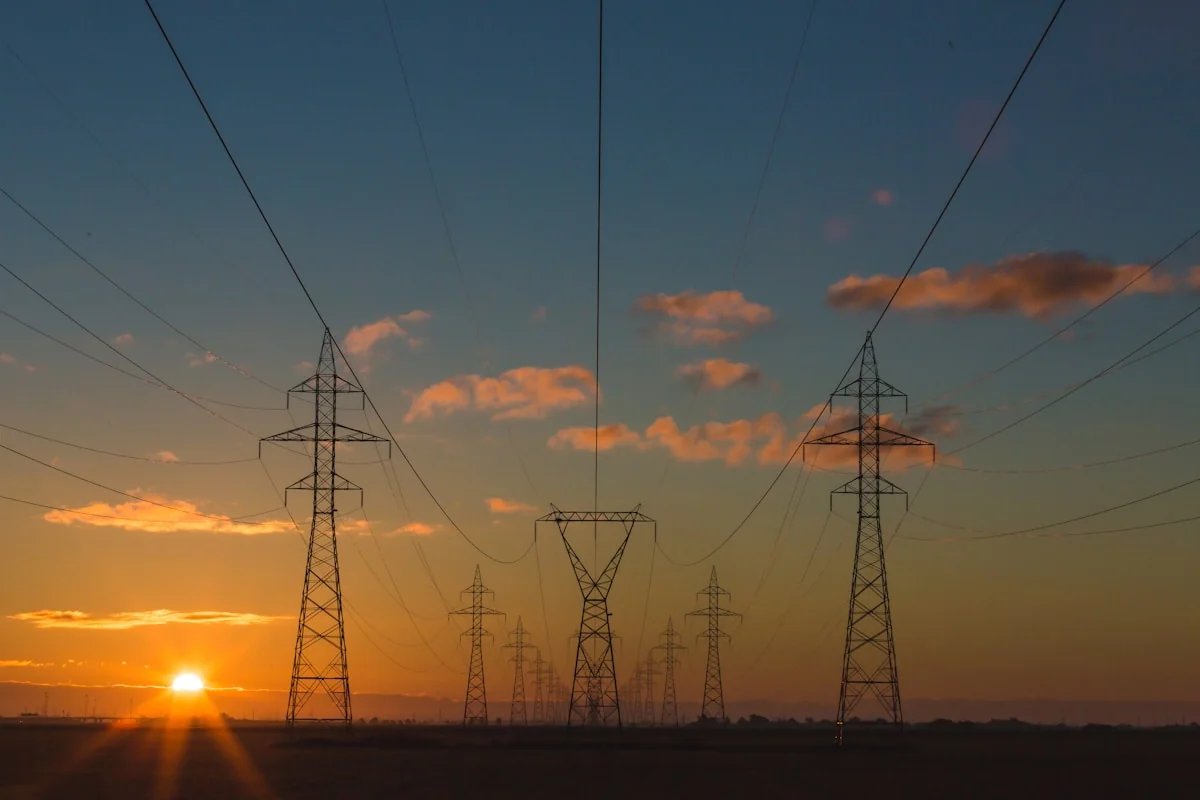
The electrical grid is the most complex real-time system in human civilization — balancing supply and demand across thousands of generators, millions of consumers, and thousands of miles of transmission infrastructure, second by second, with essentially zero tolerance for imbalance. As renewable energy penetration increases, making supply more variable and weather-dependent, AI grid management has become essential infrastructure for maintaining reliability and enabling the energy transition.
Why Grid Management Has Become an AI Problem
Traditional grid management used dispatchable generation — coal, gas, nuclear — that can be turned up or down on command to match demand. Grid operators managed a relatively predictable supply side against a variable (but well-understood) demand side. Renewable energy reverses this: solar and wind are variable on the supply side, requiring grid operators to balance a demand side that is largely predictable against a supply side that depends on weather conditions that change hour by hour.
At low renewable penetration (under 20% of generation), traditional grid management tools handle this reasonably well. Above 30-40% — which multiple U.S. states and European countries have already reached — the grid management challenge requires AI-level forecasting and optimization capabilities that rule-based dispatch systems cannot provide.
AI Demand Forecasting: The Foundation of Grid AI
Every grid management decision depends on accurate demand forecasting — how much electricity will consumers need in the next 15 minutes, 4 hours, 24 hours? AI forecasting models dramatically outperform traditional statistical approaches by integrating weather data, economic activity indicators, real-time consumption data from smart meters, and historical patterns across thousands of customer segments simultaneously.
Elia Group, Belgium’s transmission system operator, deployed AI demand forecasting and documented 30% reduction in forecast error compared to traditional statistical models. For a transmission system operator managing gigawatts of power, a 30% improvement in forecast accuracy means proportionally lower operating reserves — expensive generation capacity held in reserve to cover forecast errors — with direct cost implications for system operators and ultimately consumers.
AI Renewable Energy Forecasting
Solar and wind output forecasting has improved dramatically with AI. Machine learning models trained on weather pattern data, satellite imagery, and historical production records predict renewable output with error rates 30-40% lower than traditional numerical weather prediction-based forecasts. Google DeepMind’s collaboration with Google’s wind portfolio demonstrated that AI wind forecasting 36 hours ahead increased the economic value of wind energy by approximately 20% — by enabling advance capacity commitments to grid operators rather than selling only at real-time spot prices.
For grid operators, better renewable forecasting reduces the conventional generation that must be held on standby to cover forecast uncertainty. In systems with high renewable penetration, this standby generation — called “spinning reserves” — represents a significant cost that better AI forecasting can reduce without compromising reliability.
Real-Time Grid Optimization: Dispatch and Balancing
Grid operators use AI for real-time economic dispatch — determining which generation units should run at what output level to meet demand at minimum cost while respecting transmission constraints. Traditional economic dispatch solves a constrained optimization problem every 5-15 minutes using linear programming. AI-enhanced dispatch extends this to account for: unit commitment uncertainty (probabilistic modeling of generator availability), transmission contingency analysis (modeling grid behavior under N-1 failure conditions), and battery storage optimization (determining when to charge and discharge based on price forecasts and grid stability needs).
PJM Interconnection — the largest grid operator in the U.S., managing electricity for 65 million people — has integrated AI optimization into its dispatch processes and documented significant reductions in dispatch costs while maintaining reliability metrics. The AI’s ability to find feasible dispatch solutions that human dispatchers and traditional optimization tools miss is particularly valuable during periods of high renewable variability.
Grid-Scale Battery Storage and AI
Grid-scale battery storage — lithium-ion installations ranging from 10 MW to 1+ GW — is increasingly paired with AI optimization to maximize economic value. Battery storage can provide multiple grid services simultaneously: energy arbitrage (charging when electricity is cheap, discharging when it’s expensive), frequency regulation (responding instantly to grid frequency deviations), and capacity services (providing guaranteed capacity during peak demand periods). AI optimization determines the optimal dispatch strategy across these revenue streams in real time, accounting for battery state of health, market prices, and grid conditions.
Stem’s Athena AI platform, deployed across hundreds of commercial and utility-scale battery installations, has documented 20-35% higher revenue from battery storage assets compared to simple price-based dispatch algorithms — the AI’s ability to anticipate price movements and grid needs, rather than simply responding to current conditions, is the source of this performance premium.
Related: AI in Energy 2026 | AI Solar Wind Optimization | AI in Manufacturing 2026
Authoritative source: The IEA AI and Energy report provides the most comprehensive global analysis of AI deployment across electricity grids and energy systems — including country-by-country data on renewable integration challenges and documented outcomes from AI grid management deployments worldwide.